By EMMA WHITE
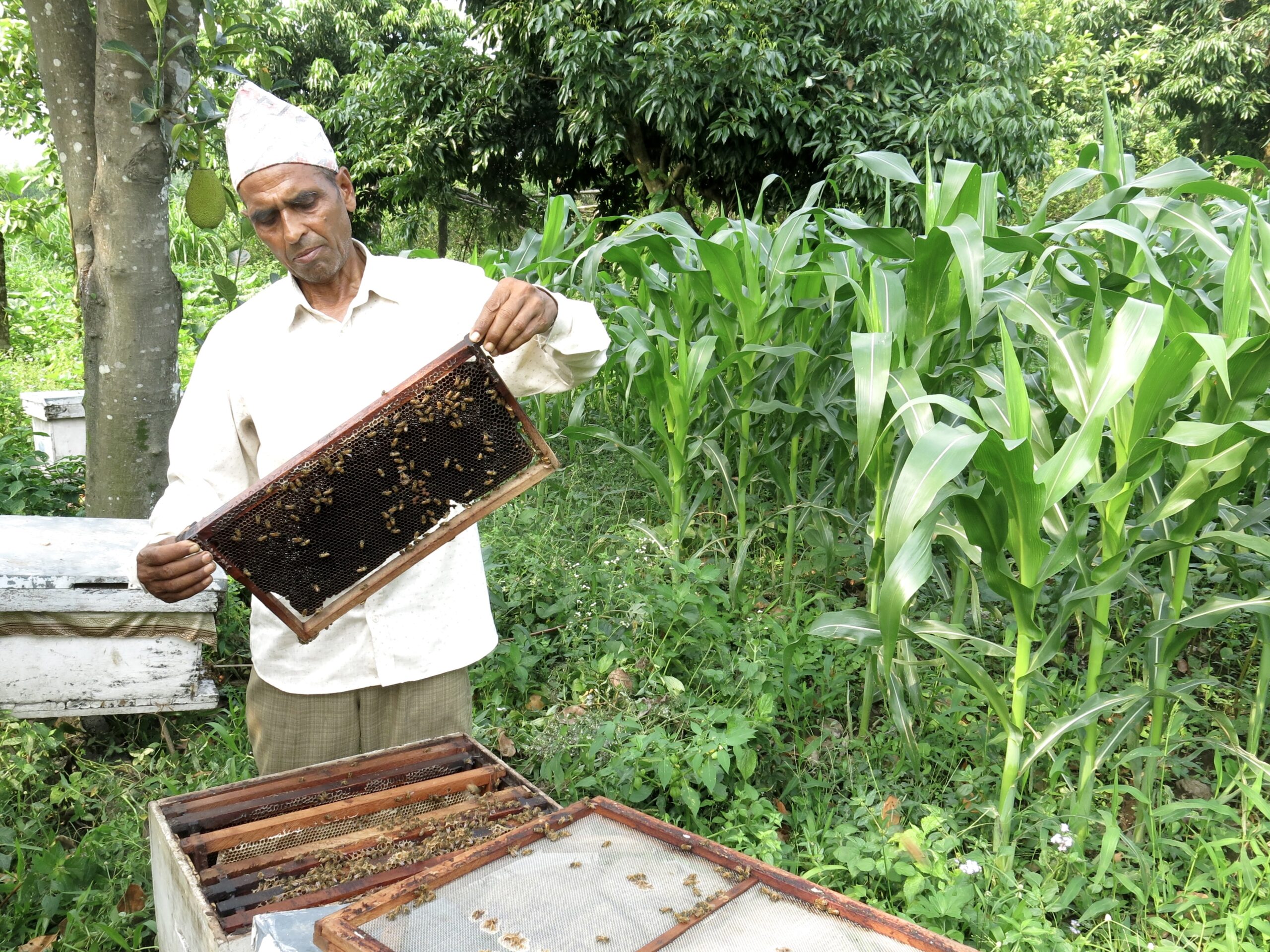
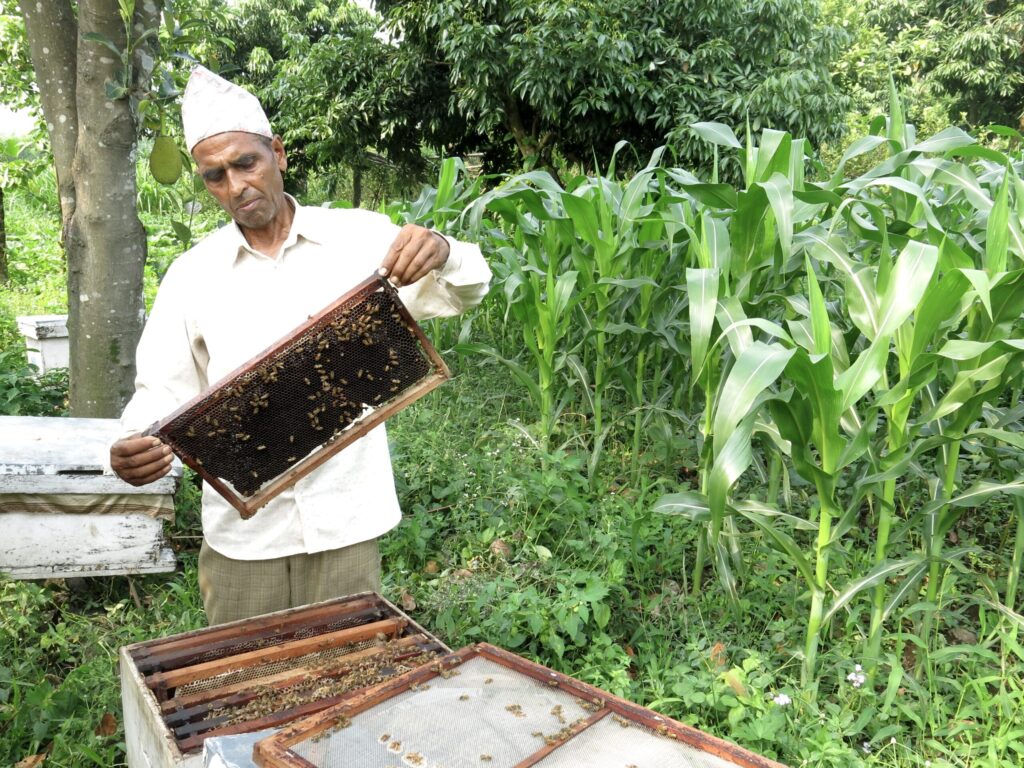
In a backyard blanketed with tall grasses and fronds, Navin Prasad Acharya gently prised open a buzzing box before him. Hundreds of bees flew out, swirling around the top of the container. Slowly Acharya selected a shelf of wax comb, called a frame, and took it out, his hands mere millimeters from the tiny creatures.
The bees showed no sign of alarm at Acharya’s gentle presence. They know him well, as he has cared for them for their whole lives. Acharya, 61, has built a successful beekeeping enterprise during the past 22 years, one that he says has changed his family’s financial situation immensely. Now reaching the end of his career, he’s helping others get started.
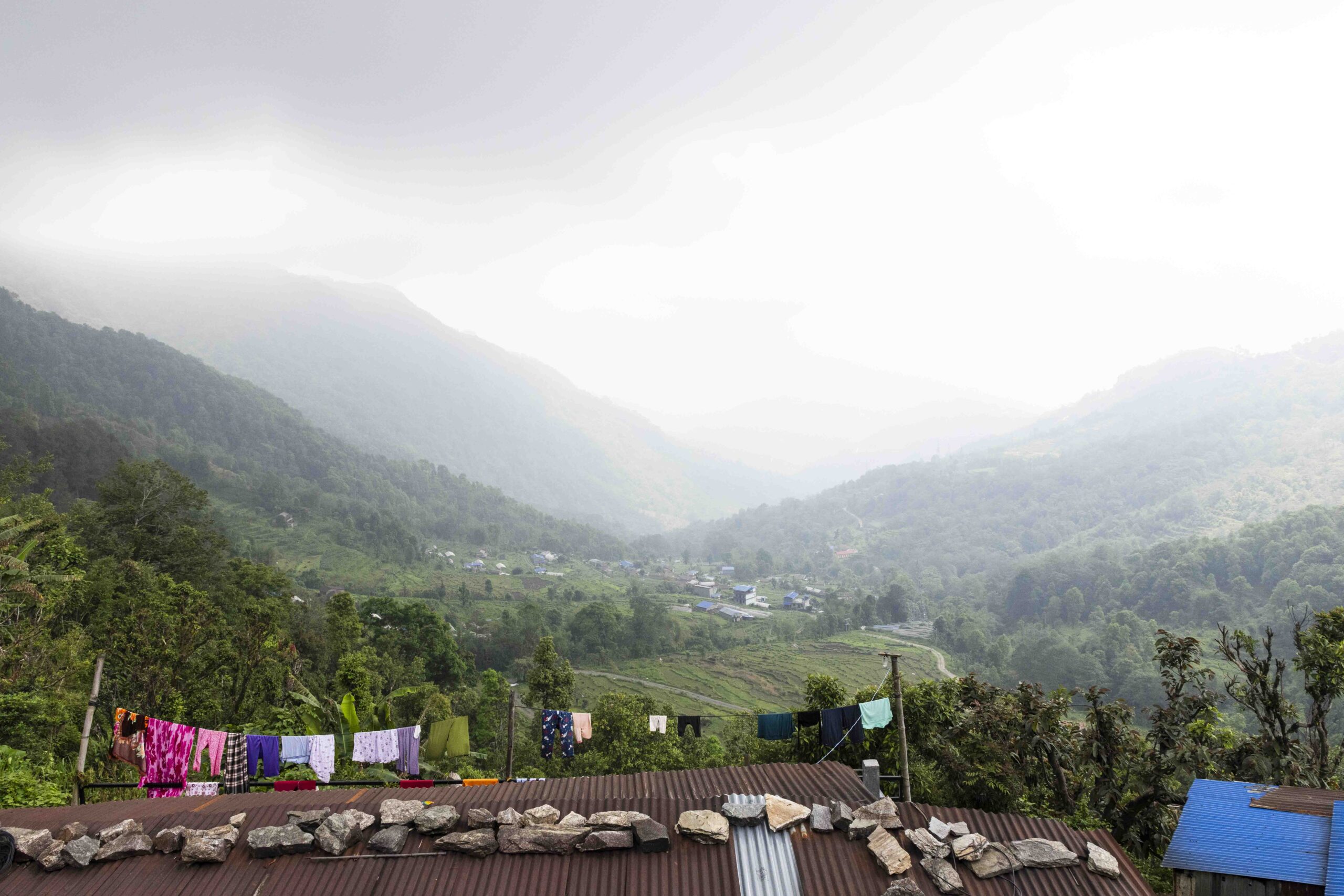
Acharya once lived in Old Padampur, a village located inside Chitwan National Park. The park was established in 1973 and communities within its borders initially remained. In the mid 1990s, the Nepali government ordered Old Padampur relocated to outside the par and the residents – approximately 10,600 people, according to a study from the National Fish and Wildlife Foundation – were gradually forced to depart. Like Acharya, many settled at New Padampur.
The family was allocated 2,500 square feet of land as part of the relocation agreement. They settled into a landscape that still needed immense work in order for farming to take place. The area had been felled recently to make room for the settlements. Countless stumps and roots had to be cleared before the soil could be plowed. There was no established water system.
“There was no irrigation, so we could only farm the corn, not rice and other stuff,” said Acharya, using his son, Ashok Acharya as a translator. “We couldn’t plant the rice because of the water, and even the drinking water was not supplied.”
Since it was impossible to sustain the family with only the money from corn crops, Acharya looked for other sources of income. At the time, there was funding available from the United Nations Development Council for people in the New Padampur area to start enterprises, with skill building workshops led by NGOs and the UNDC. Acharya was one of four men who participated in the first income generation workshop for beekeepers. More than two decades later, he is the only original member still beekeeping.
Acharya said there are a lot of uncertainties in the world of beekeeping. He’s had difficulty with marketing to larger audiences and getting the word out about this business. Additionally, Acharya said the use of pesticides on neighboring farms can sometimes kill off members of his hives. They’ve had trouble getting other farmers to understand the impacts of pesticide use, according to Acharya and his son.
Regardless, Acharya’s business grew into a model for aspiring beekeepers in New Padampur. At the height of his business he had 150 hives under his watch. He started a local cooperative of beekeepers, which now has around 40 members in the area. As his enterprise and expertise grew, he earned his nickname: “Lord of the Honey.”
Beekeeping had a huge influence on the family’s financial health, Acharya said. He was able to start saving for his children’s college and to plan for his retirement. Farming brings in very little income for the family, so beekeeping has become the primary moneymaker for them.
Acharya serves as an inspiration to other beekeepers, both in New Padampur and elsewhere. He’s taught many local workshops for people interested in beekeeping. He was even invited to India to give a training there. As Acharya approaches retirement, he’s gradually giving his hives to his friends and loved ones to get them started with their own enterprises. He currently maintains 12 of the 150 hives he managed at the height of his career.
Acharya sees bees as having a symbiotic relationship with humans, and he’s proud of how his beekeeping has aided larger conservation efforts.
“He believes that he has contributed his part as much as he could,” said Ashok Acharaya, who translated for his father. “So he’s happy to do that, but now it is his time to retire.”