By HENRY DOELLINGER
Dogs bark as boxes of medical supplies and large nets are loaded into a white four-by-four truck with a cage in the place of its bed.
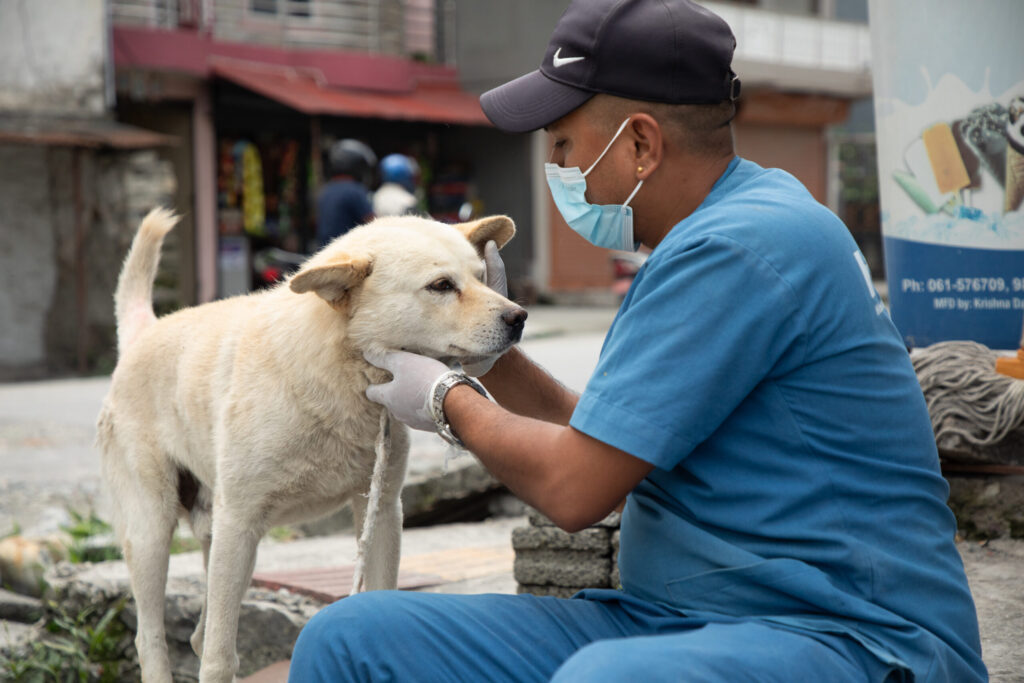
Himalayan Animal Rescue Trust veterinary doctors Sagar Ghimire and Prakash Chaudhary looked over a list of rescue calls, ready to start their weekly roundup. By 10 a.m on May 22 there were 11 requests for dog care, but some weeks it can be as many as 20, Ghimire said.

The effort to provide veterinary care to street dogs is free of cost to the public. The stray dog-focused Nepali NGO receives the bulk of its funding from grants and donations. HART has worked with Nepal’s dog population since its establishment in 2010, and has veterinary offices in Pokhara and around Chitwan National Park.
Many of Pokhara’s dogs are not individually owned, but are often cared for by the community. Many of HART’s calls come from locals members who notice ailments to the dogs they typically put out food for or play with. The most frequent health issue HART responds to is skin infections, followed by traffic accidents and maggots, according to Ghimire.
In a 2016 study published in the Bangladesh Journal of Veterinary Medicine, Pokhara residents expressed concerns over dog breeding, aggression, and disease spread from intermingling populations. Many surveyed residents attributed stray dog populations to unmanaged slaughterhouses and abandonment by owners.
As they drove, Ghimire read off the location of the first rescue to Chaudhary. Caring for animals has long called to Ghimire, who grew up surrounded by livestock on a farm.
“From the [time I was a child] I loved animals,” Ghimire said.
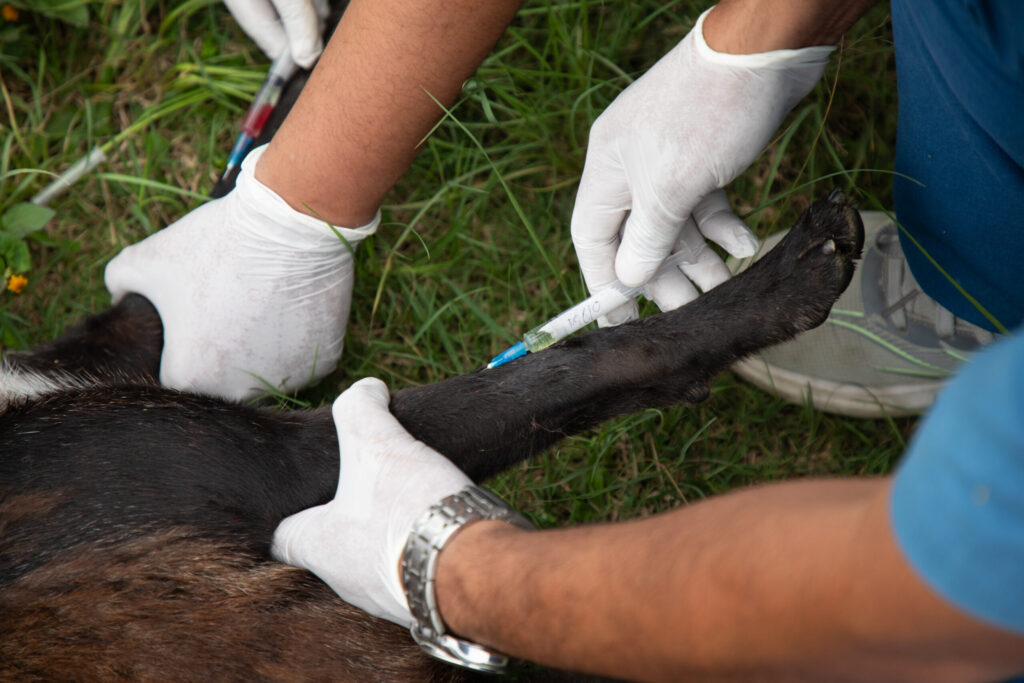
The white truck rattled to a stop at the curb of a small downtown liquor store. Outside, locals pointed out the large white dog in concern. The house call didn’t take long, after the veterinarians examined the animal, running a fever after a recent vaccination, they injected medicine and planned to check back in a week.
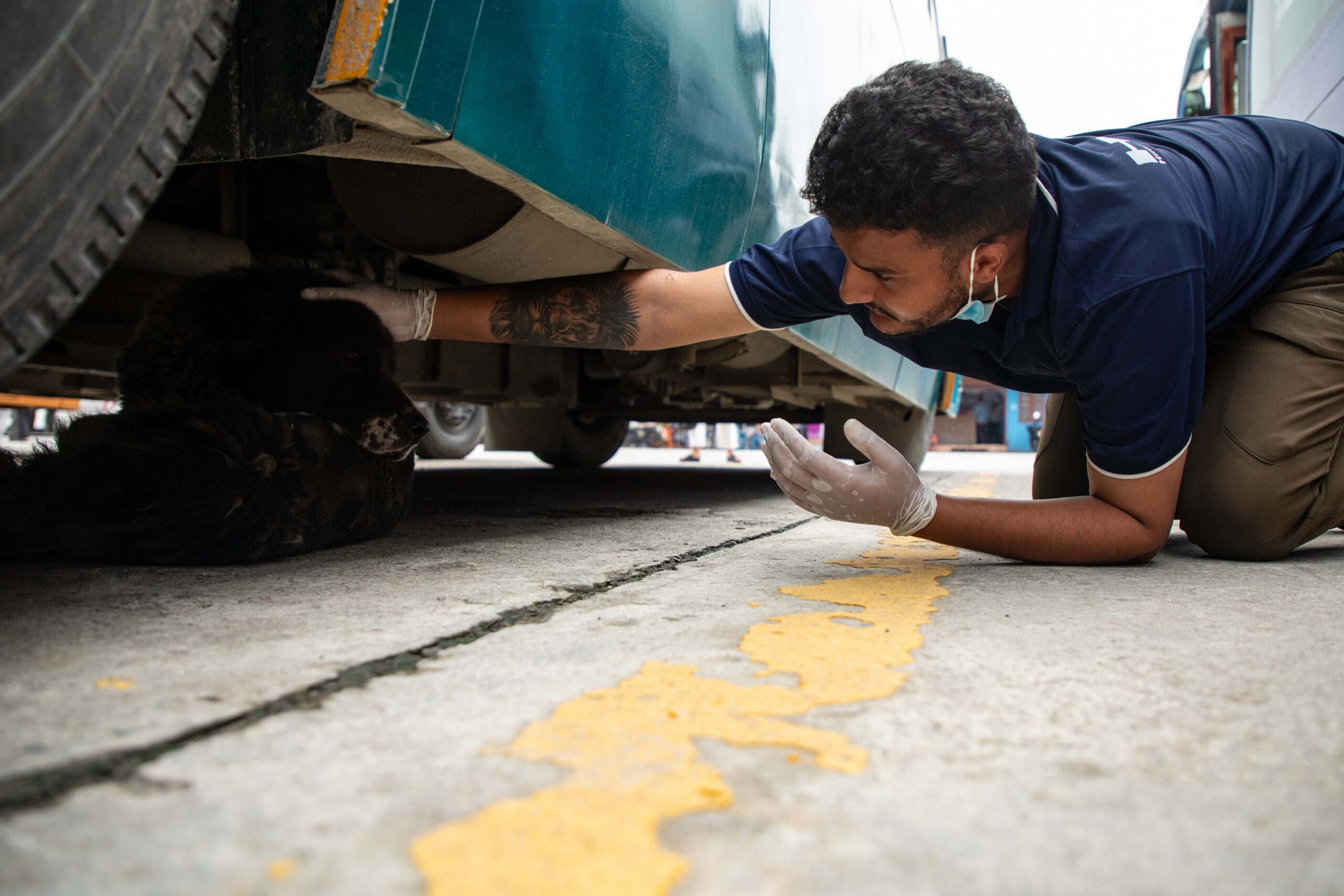
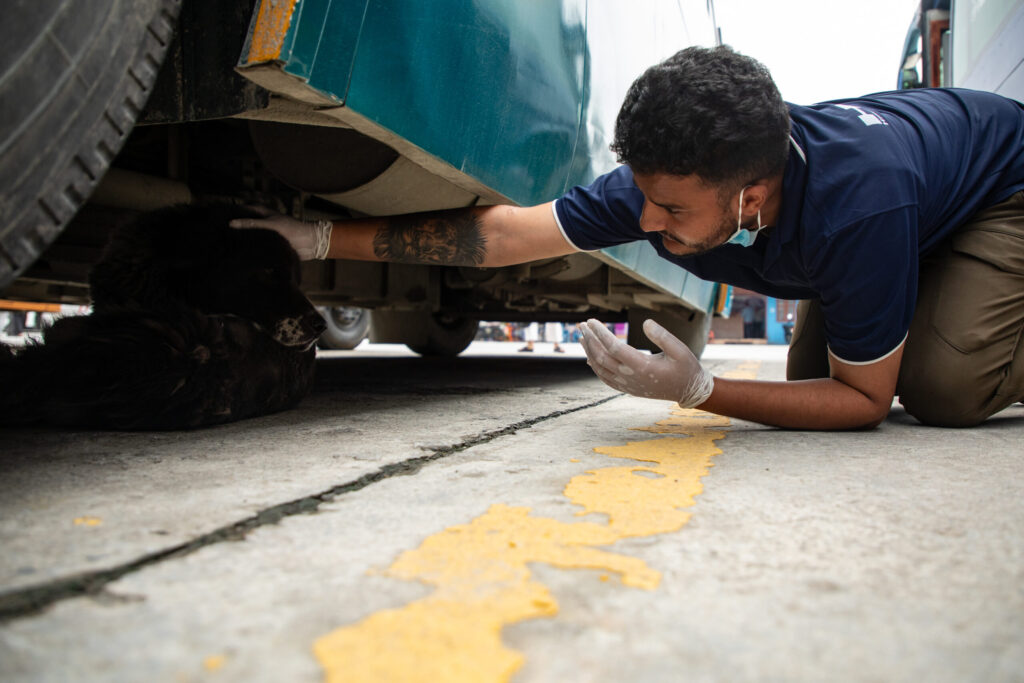
Not all the street dogs were as easy to find as the first. Later, pulling into a bus depot, Ghimire and Chaudhary spent minutes kneeling under the rows of bright vehicles labeled “tourist” until Ghimire found the salt-and-pepper colored mutt near a wheel well.
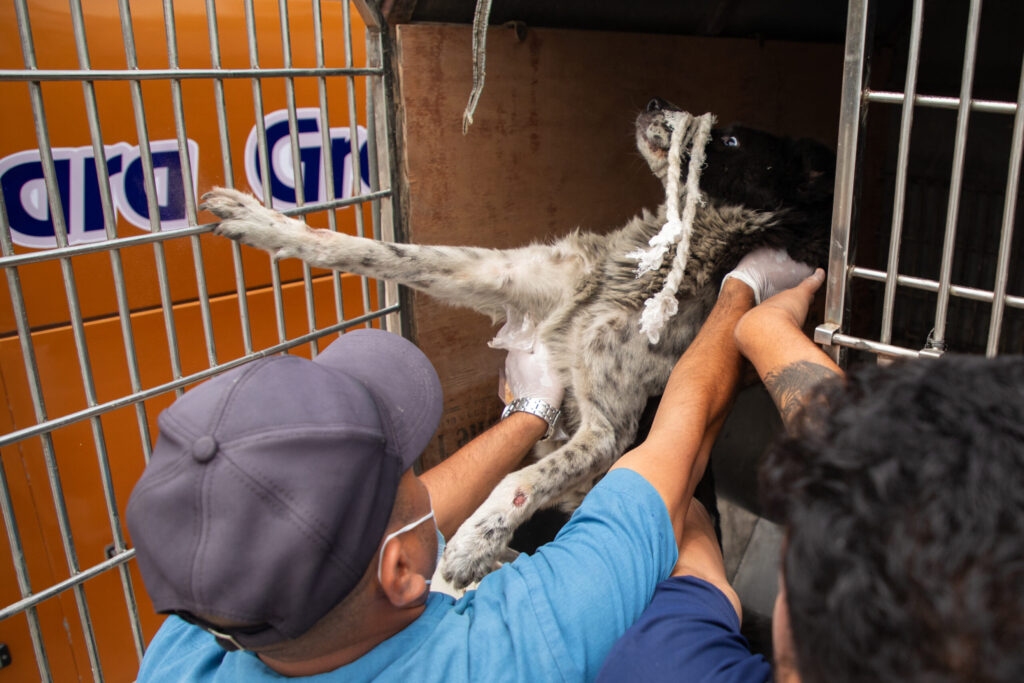
The dog’s skin was matted with grease, and, after securing its mouth shut with a strip of fabric, it was transferred to the large, stainless steel cage on the bed of the truck, to be brought for further treatment for skin allergies.
As they drove, the team received phone calls for new aid requests, such as for the victim of a recent traffic accident.
Fifteen minutes outside of the city center, along a busy highway, a black dog lay panting at the side of a water bowl, surrounded by a group of concerned neighbors. It had been hit by a vehicle only an hour before; its legs were injured and streaked with blood.
The hum of traffic continued as Ghimire and Chaudhary injected pain medicine and felt the dog’s bones for injury on the roadside. It too was transported for treatment, wrapped in a blanket and laid in the bed of the truck.
On the whole, Ghimire said, the residents of Pokhara care for the stray dog population, which was over 1,700 animals, according to several studies from the past ten years. However, as many as 40% of the population dislikes the dogs, and may throw rocks or otherwise act against them.
Ghimire expects the number of calls to HART to increase during the upcoming rainy season because the moisture fosters the spread of disease. Still, he appreciates the demands of the fast-paced and sometimes gruesome job.
“If we enjoy it all, [it does] not feel hard,” Ghimire said.

Great article and photos and I especially appreciate knowing about the work done there to help these dogs.