By EMMA WHITE
UM Journalism Abroad came to Nepal forewarned about many large, dangerous creatures. Elephants could trample us, rhinos could charge us, tigers could steal into our camp at night and attack. But so far, the most insidious beast we have encountered is one of much smaller stature: the land leech.
We came upon the land leeches on our Tuesday trek through a damp rainforest in the Annapurna Range. Tiny, ferocious and wiggly creatures, leeches can increase their body weight by up to ten times in a single meal, according to the National Library of Medicine. Land leeches are rarer than most. Rather than living in bodies of water, they prefer to lurk in rainy forests waiting for unwitting passerby. And although the cliche is as tired as they come, I really do believe they can smell fear.
The land leeches swarmed across our feet, slipping into our shoes through the eyeholes of our laces or simply clamping onto the skin of our Chaco-clad companions. Our yelps pierced the air as we scrabbled for the ends of the slippery creatures before they latched themselves onto the skin below. We continued our ascent through the misty vines, the rhythm of our steps disrupted by frantic attempts to dig leeches out of the crevices of our feet.
The crew reached the Australian Base Camp teahouse with bloody feet, socks showing red dots that slowly spread. Our open-toed companions were in a world of pain, examining the cuts between their toes and all across the surfaces of their feet. I was faring much better than most due to my heavy hiking boots that I brought for larger excursions. Still, I pulled up my sock to find a ghastly scene: one leg streaked with blood and the other marred by a massive, swollen leech fastened just under the edge of my sock.
I’m ashamed to say that I shrieked, and flung the leech as far from me as I could manage. It landed on a nearby chair. Frozen, my hands motioned toward the leech as if to pick it up, but visceral disgust prevented me. Eventually Julian took mercy on me and took it outside.
Faith shaken, I started to worry about my wide-leg pants. The talk across the table turned in a harrowing direction as we all started to wonder the same thing — how far up could the leeches get?

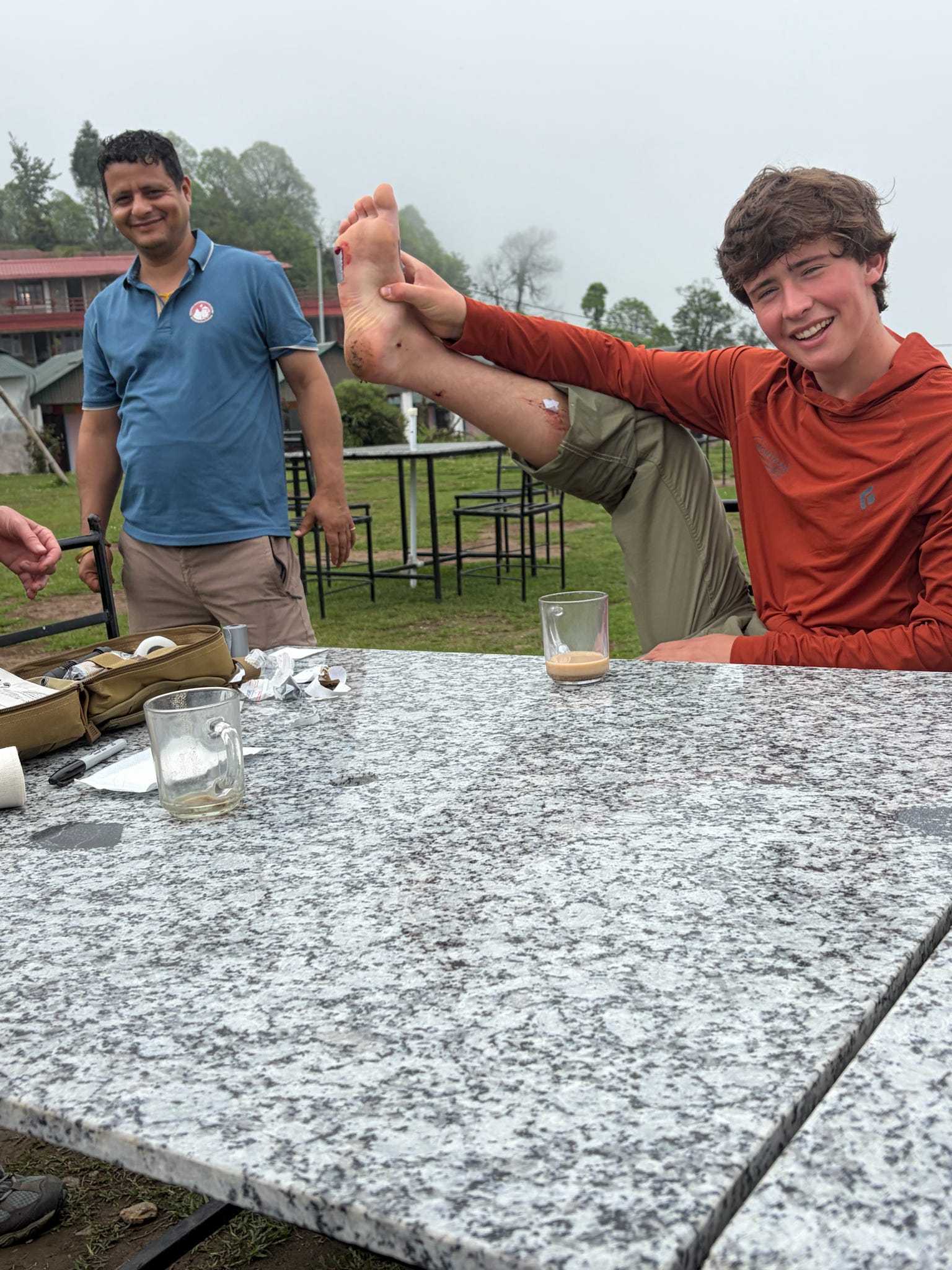
between her toes. Ostheimer was one of the unfortunate souls who decided to wear Chacos
on the hike. Photo by Emma White
A few of us decided to take matters into our own hands. Armed with phone flashlights, we descended into the tiny bathroom to assess the damage. Never have I been more grateful for the sacred bond of sisterhood than when Vivi kindly checked me for leeches, or when four of us girls vowed to pull any leech out of each other if necessary.
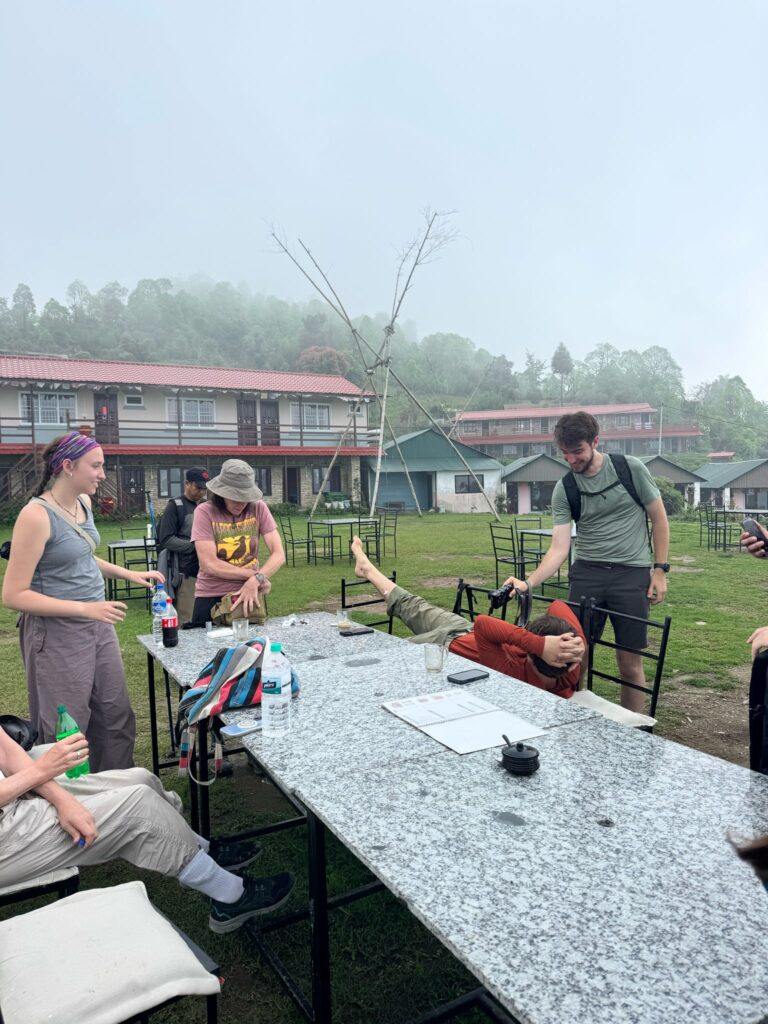
We exited the teahouse to find a makeshift first aid station outside, gauze and antibiotic spray littering the surface of the picnic table and pants rolled up to expose bloody calves. Gazing around, I was startled by the carnage wrought by creatures so miniscule. From our vantage point at the top of the food chain, it’s humbling to be hurt by a small being. Perhaps leeches exist for that very reason — to put us in our place.