By HAVEN SAGER
When I climbed into the rickety safari truck, my LifeStraw water bottle in hand, sweat slicking back my hair, I felt excited. We were in a community forest at the edge of Chitwan National Park and the gateway town of Sauraha.
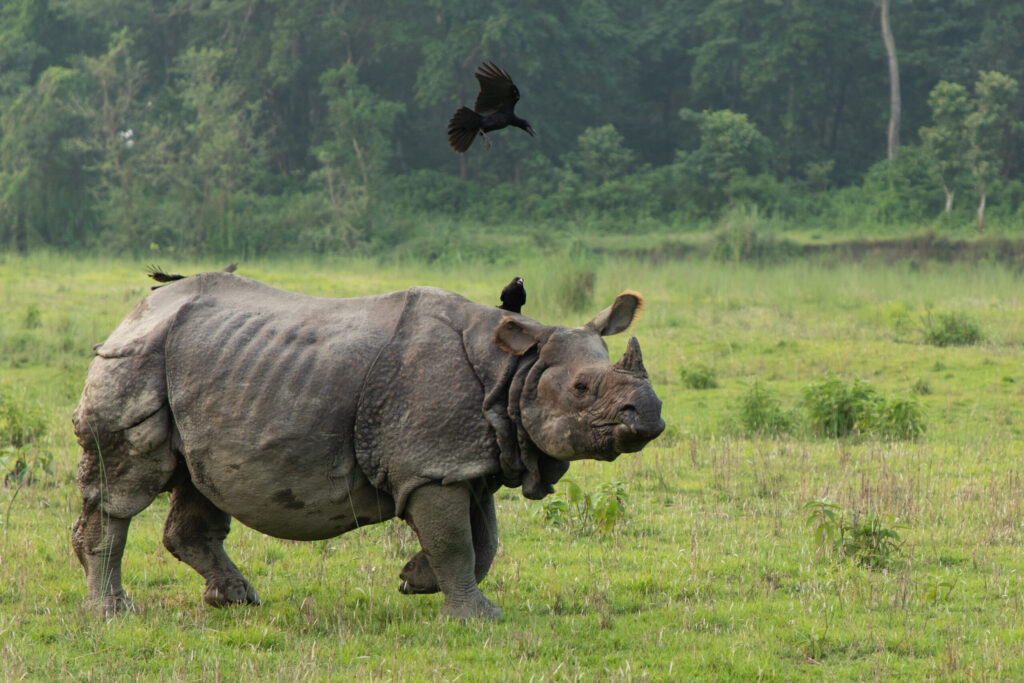
Sauraha is a place where rhinos stroll down sidewalks, goats clamber up wooden dorm steps, and elephants cause traffic jams in the streets. In shop windows, wooden carvings watch kids kick rocks down the street. Shop keepers yell out to tourists looking for a cool Coke to drink. It was the type of environment that I would call a tourist trap. It’s the type of place that could coax you into buying a hand carved wooden rhino for 500 Nepali rupees – I should know because I did just that.
Near our dorm rooms, the forest of bamboo stalks and trees wrapped in swirling vines made me feel small. The thick jungle foliage that covers this part of the earth in a vibrant green blanket. Between Nepal’s nature and the people, this place felt so different yet so familiar. I felt a twinge of what you might call de ja vu and a small ache in my chest that I could only describe as nostalgia.
I hadn’t felt this way about a national park since I was in the sixth grade when we took a three-day field trip to Yellowstone National Park, which is a great link between Idaho, Wyoming, and Montana. I was raised 83 miles away from Yellowstone National Park, but I had never stepped foot beyond the great rock entrance that throws long shadows across the end of my rival school’s football field..
My experience in Chitwan National Park was very similar to my 6th grade trip to Yellowstone.
In Yellowstone, I was mesmerized by the landscape of hot pots and geysers and I was obsessed with the bison that hung close to the winding roads. Now we slow and stop for roadside rhinos. Then, I craved to catch sight of a wolf. Now, I craved to spot the black and orange stripes of a tiger lurking just within my eyesight now.

Recognizing that flash of nostalgia made me laugh. It made me laugh because after I’d seen the glory of Yellowstone, I lost the feeling of excitement that comes with being a tourist. It was something I didn’t think I would miss, but I did. That rock archway that once captivated my attention more than anything, felt just like any other wall and pretty soon, the hundreds of elk that would squish together on a high school football field or a mountain goat scaling the hood of a parked car didn’t phase me.
I had become used to the wildlife in Montana and when tourists would pull over in their Mini Coopers or towering coach buses to snap millions of photos, I couldn’t help but think, “Dude you’re holding up traffic. It’s just a bison. Move on.”
Now, in the community forest, I was the one playing tourist, and I didn’t feel bad about it. I found myself deleting apps like Hulu, Hay Day, and Pinterest in hopes to free up just enough storage space to capture a video of a crocodile holding its mouth open while birds picked at its teeth. Now, I found myself pointing and asking questions about the silliest of creatures like little 6th-grade me was back.
After experiencing the magic of a new place on the other side of the world, like Nepal, I remind myself that it’s OK to be a tourist. It’s ok to be amazed. It’s OK to be curious and it’s OK to take your time through life. Right now, I certainly am.