
By VIVIANNE OSTHEIMER
Baldri owns a small jewelry stand on a touristy street in Kathmandu. He’s a friendly salesman with a smile that’s missing a few teeth.
In recent years, Baldri says unforeseen circumstances have impacted his business: first COVID, then political turmoil in Nepal as youth-led protests toppled the government.
Promise runs another store on the same street, barely wide enough inside for two people to stand side by side. Just past the necklaces and trinkets, he gestures into the light brightening the concrete interior: the courtyard beyond. He and his wife live back there.

Their street feels busy and lively – with constant, honking communication between motorbikes – but void of tourists. We are the only Westerners: a group of students from the University of Montana.
Nepal’s tourism industry is the backbone of the national economy. It accounts for around 7% of the country’s GDP and creates countless jobs, like Baldri and Promise’s.
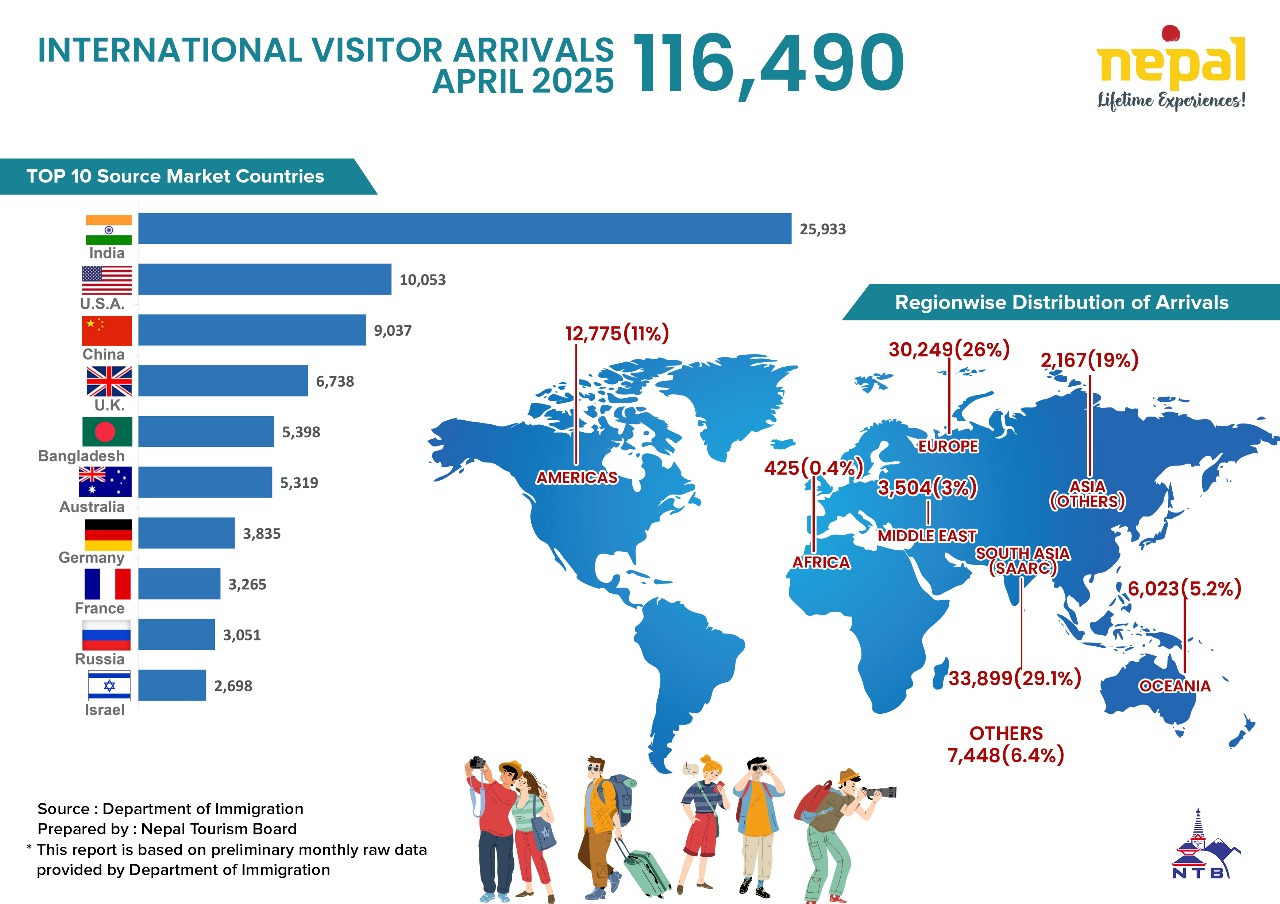
Last month, 8,724 U.S. tourists arrived in Nepal. A year ago – in April 2025 – that number was down 13% to 10,053, according to the Nepal Tourism Board.
Baldri and Promise blame the war in the Middle East for the decline.
”This is usually the tourist season,” Promise said.
Economy plane tickets are up about 24% from this time last year, according to the BBC, triggered by airspace restrictions (flights to Nepal often connect through Middle-Eastern cities like Doha, Dubai, Abu Dhabi, and Istanbul) and high fuel prices. The war started on February 28th, and jet fuel prices spiked in March, remaining high.
Fortunately for Baldri and Promise, most tourists to Nepal are from India and China; last month, Nepal welcomed 25,196 Indian tourists and 11,722 Chinese tourists.
“People from India and other places in Asia are coming more in the off-seasons for religious reasons,” Promise said, “like to visit temples.”
Nepal’s shopkeepers will look forward to an influx of tourists for upcoming Hindu holidays.
Next is Rasksha Band (called Janai Purnima in Nepal), a festival celebrating the bond between siblings, in August.


Awesome picture! I love feeling local and at the same time learning about national issues.